.svg)
Clemens Kraft is one of the largest owners of small hydropower plants in Norway. As of 2026, it has a portfolio of 50 small-scale run of river installations scattered across the country.
The company also sells Guarantees of Origin (GOs). These certificates, which power consumers use to document clean energy usage in Europe, have become an increasingly important complement to Clemens Kraft's revenue and may even be an incentive for new investments. But to realise these benefits, Clemens Kraft needed a partner — someone who would help them navigate the GO market, connect them with customers across Europe, and ensure that this additional revenue continues over time.
The importance of GOs for renewable energy producers
Small-scale hydropower — or småkraft, in Norwegian — exploded in Norway in the early 2000s. The country had already electrified thanks to large hydro dams, which propelled industries such as aluminium smelting. But it was not until the turn of the millennium that smaller landowners started either renting out the rights to the vertical fall of water — known as fallrett — or building their own production devices. Today, about 8% of Norwegian electricity output comes from installations with a capacity under 10 MW.
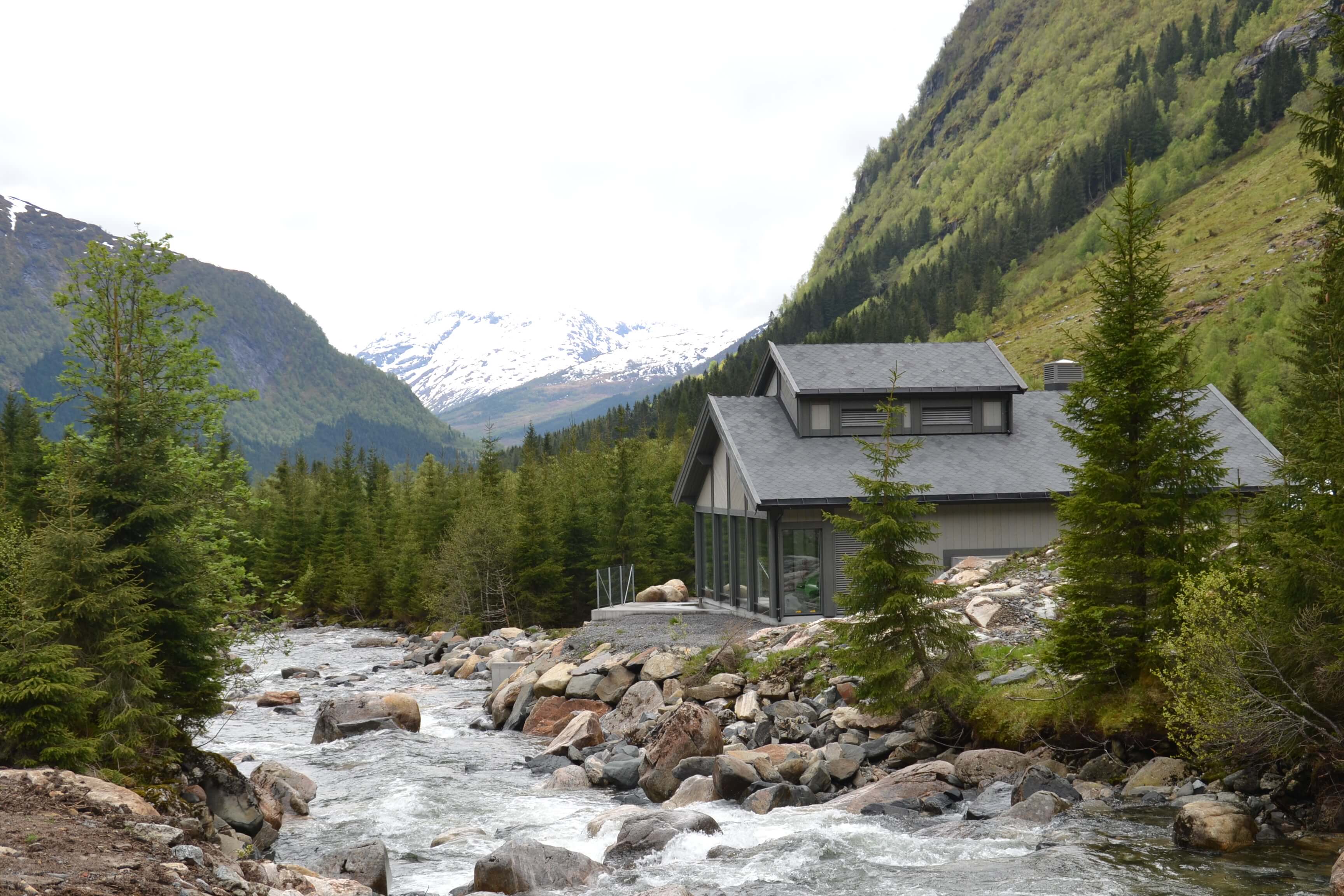
The Kupe power plant in Sunnfjord, close to the Norwegian west coast. Photo: Clemens Kraft
For Allstad, the state-owned enterprise that holds the majority of Clemens Kraft’s shares, the boom meant an opportunity to start a business that has grown from a handful of power plants to a portfolio that now generates more than 650 GWh a year. And although the core business has always been electricity, selling Guarantees of Origin became a welcome supplement to the company’s revenue.
“GOs have been helpful when the electricity market is low,” Unni Hongseth, CFO of Clemens Kraft, said. In 2023, when GO prices were above 4 euros, Norway experienced more than 1,700 hours with negative electricity prices, which often forced power producers to shut down their devices. Clemens Kraft, however, kept their plants running. “GO income would offset our losses, meaning that it was still profitable to keep the plants going even if the price of electricity dipped below zero.”
GOs can also influence how investments are allocated. “Electricity prices have been decreasing, so anything that comes on top helps us stay profitable and grow. When GO prices are reasonably high, that revenue allows us to plan and invest in new power plants, too,” Hongseth continues.
Even though the GO market is fluctuating, Clemens Kraft’s comments echo the sentiment of many in the industry: Guarantees of Origin underpin the bottom lines of power producers, partially making new investments in much-needed renewables possible. Realising that revenue also depends on a healthy European single market, and knowing where to find the right buyers.
Finding GO buyers: why Clemens Kraft works with Ecohz
“The GO market is not transparent for producers,” Hongseth says. “Identifying and approaching buyers, especially outside of Norway is challenging. Our organisation has a small administrative team and we cannot dedicate the necessary time and priority to managing the market on our own.”
Clemens Kraft partnered with Ecohz to connect with European buyers, gaining access to a portfolio of hundreds of corporate clients, including companies like H&M, Asahi, and thyssenkrupp AT, among others. “Ecohz knows the GO market,” Hongseth continues. “For us, it is much easier to have them as a single point of contact than trying to get directly in dialogue with customers in Germany, Italy, or wherever they may be.”
Ecohz also acts as an end-to-end GO manager, overseeing the issuance, transfer and cancellation of certificates, and saving Clemens Kraft a large amount of administration they are not geared to do. “For a small organisation like us, it is important to have someone take care of our portfolio in a way we can trust,” Hongseth adds.
Crucially, Ecohz ensures that all GOs are sold. Clemens Kraft receives guaranteed payment for the totality of their production, while they also get an overview of the buying counterparties, future hedges, and market insights. At the same time, Ecohz advisors seek out ways to obtain the highest possible value from every sale.
“We are the GO managers for multiple producers, which allows us to package them in ways that meet the needs of different customers,” Lars Semb Maalen-Johansen, Renewable Portfolio & PPA Manager, says. “For example, we can cater to companies seeking monthly matching or to those looking for a special energy mix. Piecing together the special traits of GOs increases their value.”
This cash flow would not be possible without the European single market. Sustainability standards currently recognise the purchase and transfer of GOs to all country that are members of the Association of Issuing Bodies. This encourages consumers to procure GOs across borders and opens business possibilities for sellers.
However, proposed changes to the Greenhouse Gas Protocol (GHG-P) would move towards a fragmented market, where GOs could be sold — with some exceptions — only within the price area in which they are issued. Norway, for example, would be split into five separate areas, dramatically reducing the ability of producers like Clemens Kraft to sell GOs. “Most buyers are located outside Norway. The market available for Norwegian power producers to sell GOs would change dramatically,” Hongseth adds
The environmental benefits of small-scale hydropower
Norway has some large hydroelectric plants. For instance, Ulla-Førre, the largest hydro complex in Northern Europe, has an installed capacity of 2100 MW and a reservoir of 3,105 million cubic meters called Blåsjø.
Big hydro has contributed greatly to building Norwegian industry and supplying the country with low-carbon electricity, but it also has an oversized environmental impact. Blåsjø alone covers an area of 272 km2, with four large dams containing water that would otherwise flow freely in rivers and streams. Whenever a large hydro plant is built, the landscape changes drastically.
Small-scale hydro is a different story. Classified as installations with under 10 MW capacity, these devices use, on average, an area of 1 km2 per TWh generated. For reference, a median wind park uses 35 km2.
Following regulations by the Norwegian Water Resources and Energy Directorate (NVE), small hydroelectric installations must also have fish ladders to allow salmon and other species move up and down the river; special features for eel relocation; intake grates to keep fish from falling in the turbines; a minimum water flow to avoid dry riverbeds. The list goes on.
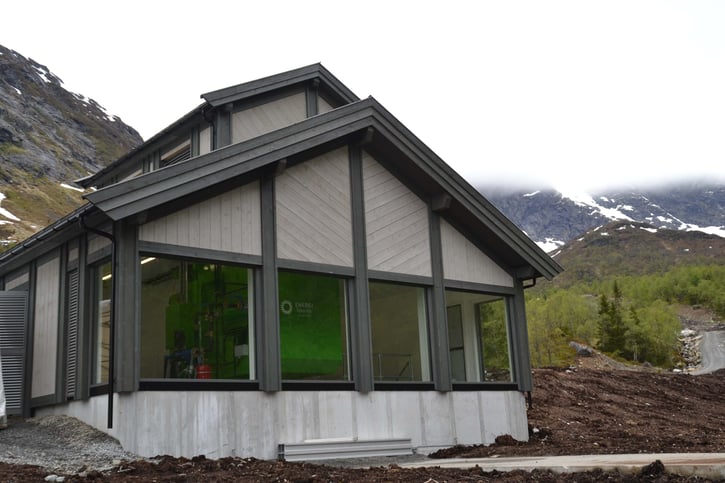
Additionally, most piping runs underground, while local stone and peat are used to hide necessary facilities. Power stations are even located in buildings that match local materials and aesthetics. Often, you have to get very close to notice that you are at a power installation.
“Small hydro has a very modest environmental footprint compared to other kinds of renewable power,” Hongseth says. “There is of course an impact, but we can often use infrastructure that was already there, like roads, which minimises our intervention in the landscape.”
To clean energy buyers, low impact matters. “We regularly see companies look for the most sustainable type of renewable energy, especially that which carries ecolabels,” Maalen-Johansen, continues. “The fact that Clemens Kraft has so many devices with high environmental standards is a big advantage, as we can fulfil most of those requirements.”
Småkraft took off when farmers and other local landowners realised they could turn their rivers and streams into businesses that supply one of the greenest forms of electricity. GOs can bring those environmental benefits to the rest of Europe and help producers raise the value of renewable power.
.png?width=3840&height=2560&name=Sun(1).png)

.png?width=3840&height=2560&name=Landscape_2(1).png)