.svg)
Although all biomethane is identical in chemical composition, each volume of gas has specific characteristics that influence how it can be used for different purposes, from voluntary emissions reporting to complying with regulations.
Based on the criteria of the ISCC certification scheme, we explain what we mean when we talk about quality, what traits to look out for, and what types of biomethane should companies in Europe procure depending on their intended use.
What does quality mean when talking about biomethane?
In the context of biomethane, quality means the different environmental characteristics associated with a volume of renewable gas. These can be broadly divided into two categories.
Greenhouse gas savings
Under European law, greenhouse gas savings are calculated by comparing biomethane’s carbon intensity to that of non-renewable fuels. Let us break this down step by step.
Carbon intensity, also called GHG performance, is the sum of the greenhouse gases emitted by all the processes involved in the production and transportation of a volume of biomethane before it is turned into energy.
These processes include:
- GHG emissions from the extraction or cultivation of raw materials, or feedstock
- Emissions from the transport of feedstock to the digester and the transport of processed biomethane
- Emissions from processing
- Emissions from compression
- Non-CO2 GHG emissions from combustion
The carbon intensity, expressed in grams of CO₂ equivalents per megajoule (gCO₂eq/MJ), is then compared to the emissions of “fossil fuel comparators,” standard emissions factors defined in the Renewable Energy Directive (RED III) for the fuels most often used for different purposes — for example, transport fuel.
The result is a percentage of GHG emissions savings, or else, how much lower are biomethane’s emissions in relation to the fossil fuel comparator. In the example below, obtained from an ISCC Proof of Sustainability (more on that later), you can see that this volume of biomethane obtained from a blend of different feedstocks represents a GHG saving of just above 80%.
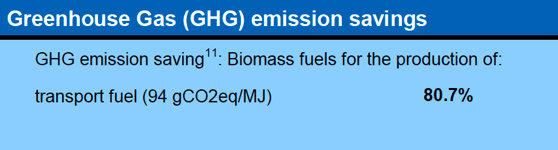
Importantly, thanks to processes such as soil enrichment, carbon capture and storage, and preventing methane emissions from manure used as feedstock, biomethane can have such high carbon performance that it results in a negative carbon intensity, meaning that the GHG savings percentage can exceed 100%.
Sustainability: impact on ecosystems
Obtaining feedstocks for biomethane production has an impact on the ecosystems they are extracted from. To assess the extent and severity of those effects, the ISCC considers variables like:
- Waste vs crops: The distinction between using discarded organic materials — anything from wood chips to manure — and plants specifically cultivated to be transformed into biofuels.
- Indirect land use change: The conversion of land to other use purposes prompted by the production of biomethane, for example, the expansion of agricultural land into previously forested areas.
- Intermediate crops: Whether energy crops are grown between two main crops on agricultural land without displacing food production. Intermediate crops can also enhance soil quality.
- Extraction method: The impact of the processes used for gathering feedstock on the ecosystem.
Article 29 of RED III also evaluates the influence of biomethane production on deforestation, biodiversity loss, the conversion of high-carbon land, and the sustainability of forest practices, and provides a pass-fail assessment. To align with regulations such as the EU Emissions Trading System (EU-ETS), biomethane must comply with Article 29.
What quality of biomethane does my company need?
Unfortunately, there is no simple cheat sheet that biomethane buyers can consult on this subject. Rather, the decision depends on the intended use of the biomethane and the voluntary or regulatory framework that governs that purpose.
Look at the table below. We have divided the most common use purposes into three categories: production of heat, production of electricity, and transport. Along the other axis, we have regulatory frameworks — mainly the EU-ETS 1 and 2 — and sustainability standards, such as the Greenhouse Gas Protocol, SBTi, and CDP.
Depending on the use purpose and the framework they relate to, different sectors and companies will have specific requirements for sustainability and GHG savings. Keep in mind that the EU-ETS is stricter than the voluntary standards, meaning that any solution compliant with the regulation would also satisfy voluntary disclosure.
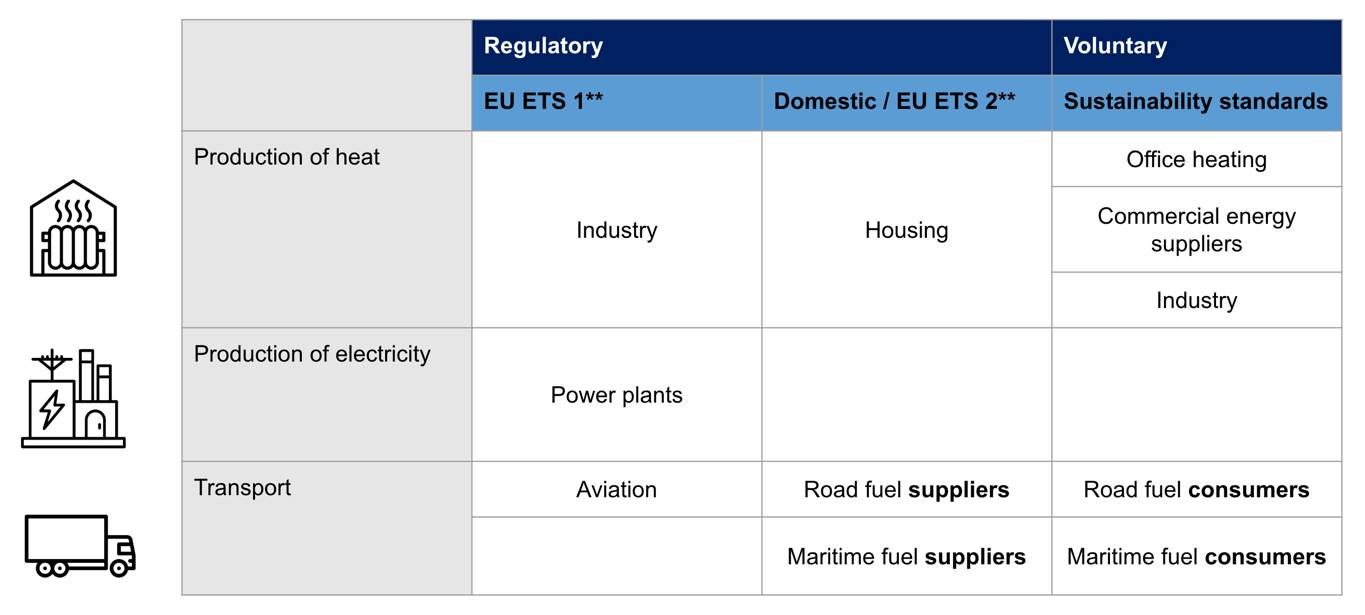
**National boundaries and/or registries apply
For example, according to RED III, the carbon intensity of the fossil fuel comparator for the production of heat is 80g CO2e/MJ. This means that companies in industrial sectors covered by the EU ETS 1 should procure a blend of biomethane with a lower carbon intensity. They should also meet the sustainability requirements of RED III, Article 29 to reduce the number of ETS quotas they must purchase.
Purchasing biomethane can be complex, which is why each case must be reviewed individually. In addition, organisations must make sure that they obtain the appropriate documentation to substantiate the use of renewable gas.
What types of documentation do companies need to report the use of biomethane?
According to EU law, biomethane is a commodity that can be sold and bought in the market. But to be considered as renewable fuel, biomethane must be purchased as a bundle of three elements:
- CH₄ molecule: Physical methane delivered through national gas pipelines.
- Guarantee of Origin (GO): A certificate containing information on the source of a volume of biomethane produced and delivered to the grid. GOs are also commodities in themselves and can be traded independently.
- Proof of Sustainability (PoS): A delivery note detailing all the feedstocks used to produce a volume of biomethane, as well as the GHG savings and sustainability characteristics of that volume of gas. It certifies the entire value chain of biomethane and cannot be traded separately from the physical gas.
Thus, in legal terms, physical biomethane is the combination of one molecule and two documents. All three are needed to claim the consumption of renewable gas in line with European regulation.
However, not all buyers need all three elements. For example, purchasing GOs might be sufficient for organisations who just seek to voluntarily disclose lower emissions. For reference, look at the table below.
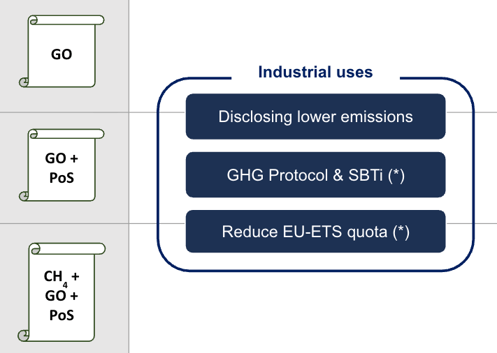
*Regulation inconsistent or to be clarified
How can Ecohz help?
Ecohz can help you determine and procure the type of biomethane that best suits your specific needs. Our advisors offer tailored guidance to companies looking to reduce Scope 1 emissions, supporting them in sourcing renewable gas across all available markets in Europe and North and South America.
After electricity, biomethane is the next step in energy decarbonisation. Our team provides comprehensive renewable energy advisory services to help your company transition to renewables across your global locations.

.png?width=3840&height=2560&name=Sun(1).png)

.png?width=3840&height=2560&name=Landscape_2(1).png)