.svg)
Refrigeration is a substantial source of greenhouse gas emissions. The sector accounts for close to 8% of global emissions, more than half of which come from the energy usage of refrigeration equipment. The electricity consumption of the refrigeration sector—excluding heat pumps—represents around 20% of global electricity consumption.
At the same time, companies in the refrigeration business are leading climate action and increasingly setting emissions reduction targets, with Scope 3 featuring prominently in their strategies.
Leaning on the latest guidance from the Science Based Targets initiative (SBTi), this article focuses on an often-underappreciated part of supply chain emissions—those that come after the sale of a product—to explain how the refrigeration sector can use renewable electricity to set itself on a net-zero pathway.
What is downstream Scope 3?
According to the Greenhouse Gas Protocol, downstream Scope 3 emissions are indirect greenhouse gas emissions that occur in the value chain after a company sells its products or services. Downstream emissions are divided into seven categories:
- Downstream transportation and distribution
- Processing of sold products
- Use of sold products
- End-of-life treatment of sold products
- Downstream leased assets
- Franchises
- Investments
Categories 11 and 13 are especially important for the refrigeration industry. Category 11, use of sold products, refers to emissions released when end users consume or operate the products sold, such as burning fuel in a car or using electricity in an appliance. Category 13, also covers the operation of leased equipment.
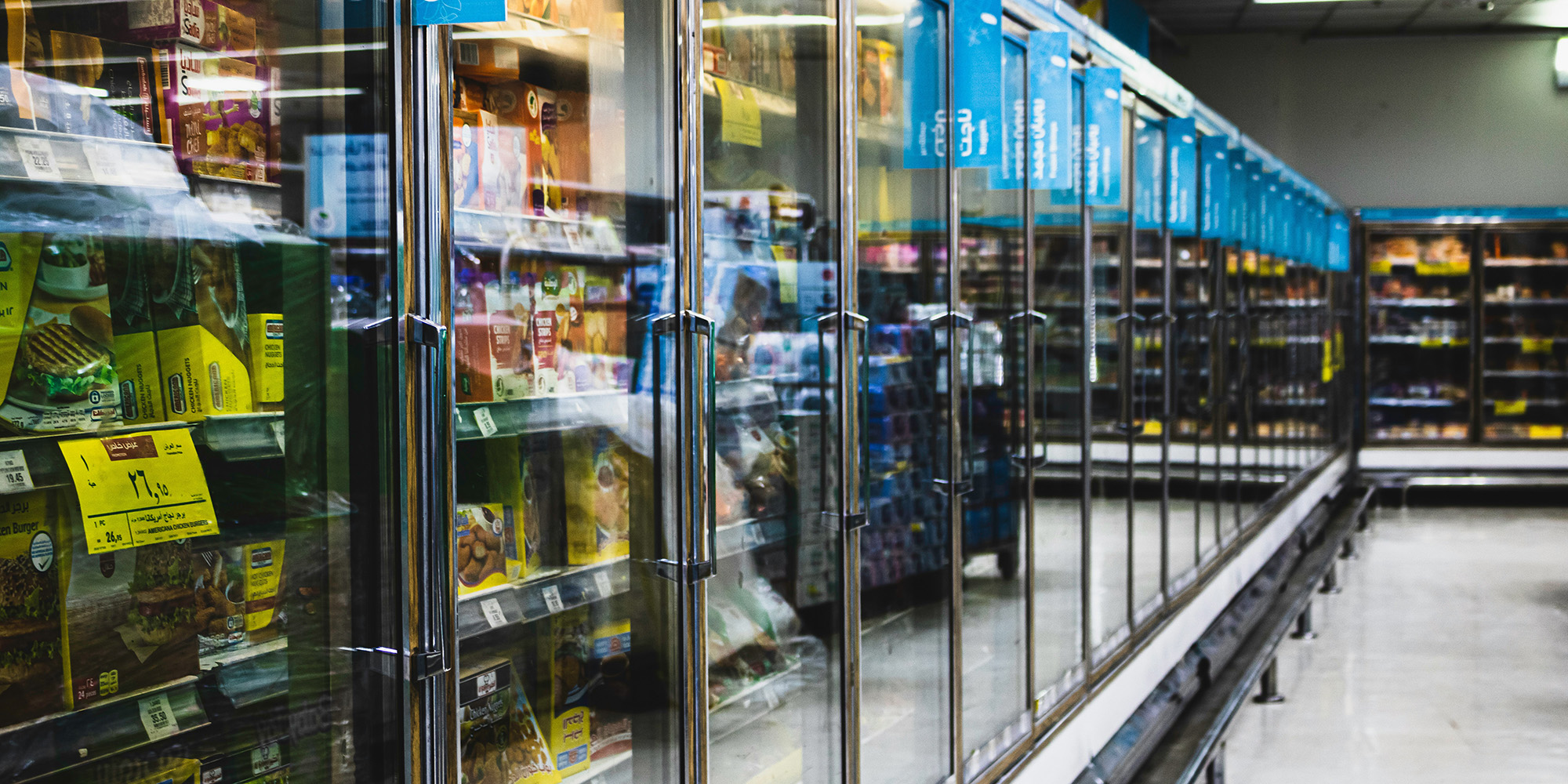
For companies in the refrigeration sector, electricity consumption from sold (Category 11) and leased products (Category 13) is a substantial source of greenhouse gas emissions. For example, close to 40% of the energy consumption of a medium-sized supermarket is generated by refrigeration.
Of course, equipment size and electricity use vary vastly depending on the product in question—from a few hundred kWh/year for a small chilled display cabinet to more than 15 MWh/year for large supermarket cabinets. The opportunity to reduce CO2 output is vast.
Setting downstream Scope 3 targets: What does the Science Based Targets initiative (SBTi) say?
In the latest version of its Corporate Net-Zero Standard (CNZS), the Science Based Targets initiative (SBTi) reiterates the intention “to transition companies to net-zero by 2050 or sooner for their Scope 3 emissions.” To achieve that, it encourages companies to focus on the “most material emissions sources in their value chains,” meaning businesses’ near-term targets should include categories that exceed 5% of their Scope 3 inventory.
For companies with concentrated emissions in certain Scope 3 categories or from high-emitting activities, the SBTi also allows for category- or activity-specific targets. The approach “is designed to encourage the procurement of lower-carbon commodities and a gradual transition toward lower-carbon products and services” and differentiates between upstream and downstream emissions, in recognition that companies may have different levers to influence each category.
“Since they are relatively easy to quantify and monitor, Category 11 and 13 emissions are among the simplest downstream Scope 3 categories for refrigeration companies to address,” says Nils Holta, Net Zero Advisor at Ecohz. “Energy Attribute Certificates (EACs) are a useful tool, as they can be centrally procured and assigned to downstream consumption. However, EAC procurement should follow some basic criteria.”
The role of Energy Attribute Certificates (EACs) in covering downstream electricity consumption
Companies can use Energy Attribute Certificates (EACs) to cover Scope 3 electricity consumption, cancelling and assigning them to specific consumption points. However, the SBTi has introduced a new rationale for the use of certificates and emissions accounting.
The Corporate Net-Zero Standard v2.0 recognises three different levels of action for reducing emissions: activity level, activity-pool level, and sector level: Improving the energy efficiency of appliances and using lower-GWP refrigerants, for example, fall under activity-level actions. Meanwhile, EACs correspond to the activity-pool level: actions that take place in a shared grid—such as electricity and gas—where companies contribute to the collective decarbonisation of the system.
When reporting emissions reductions, organisations should be careful to not report EAC purchases towards your physical GHG inventory, but as efforts at decarbonising energy grids (activity pools) or sectors.
It is important to note that, while the SBTi offers guidance for science-based emissions reductions, not all cases will appear equally clearly under existing guidance. “Always check with your auditor what they consider valid,” Holta continues. “Ecohz can help you design a procurement plan that meets their expectations and supports credible renewable energy claims in all your locations.”
Basic considerations when purchasing Energy Attribute Certiticates (EACs)
When refrigeration companies purchase EACs to demonstrate downstream renewable electricity consumption, they should consider some basic factors:
- Electricity consumption calculation: Actual consumption figures for appliances in service may be impossible to retrieve. However, refrigeration companies have good average electricity consumption figures for their appliances that can be used as a credible guide to determine the volume of electricity they should cover.
- Location: Different EAC systems are available in different locations, with distinct rules and market dynamics that can influence procurement.
- Procurement deadlines: Procurement and reporting deadlines can vary dramatically depending on the country and the EAC system in question. If you are reporting to sustainability initiatives and standards, such as CDP and SBTi, their reporting deadlines should also be taken into account.
- Cancellation and attribution: When assigning EACs to consumption points, be as specific as possible. Credibility hinges on clear and transparent attribution.
- Quality criteria: Whether they are part of sustainability initiatives such as RE100 or have their own sustainability criteria, companies may need EACs that meet different quality requirements, such as the technology used to produce the energy, the commissioning date of the power plant, associated ecolabels, and other criteria.
Buying EACs with the Ecohz Supply Chain Portal
The Ecohz Supply Chain Portal makes it easy to purchase EACs and assign them to your downstream Scope 3 consumption.
First, Ecohz’ advisors help you set up a profile in the Portal, where you will be able to make EAC purchase orders, store documentation, and monitor progress towards your renewable energy goals.
Once your profile is up and running, you can make requests for renewable energy directly through the Portal. Just click Request to get a price quote for the EACs you need. Acceptance of offers and delivery of the certificates (EACs) are handled directly in the Portal.
Select the year you are covering with renewable energy. If most of your consumption occurred in 2025, then select 2025. You can also upload documentation, such as consumption data for the consumption points you are covering.
Fill in the amount of MWh needed for a client’s share of your electricity consumption.
Once an offer is ready, you will automatically receive an email containing the offer’s validity period.
After you click Review Offer, you will be directed to the Portal to see all the details. Simply click Accept Offer to proceed with the purchase. A contract for that individual transaction is sent upon acceptance.
Ecohz’ advisors are available to help you at any stage of the process. Whether you need help understanding the EAC systems available worldwide, determining how to credibly document the energy usage of products and consumption points, or deciding when to buy for maximum cost-efficiency, we are always here to help.


.png?width=3840&height=2560&name=Sun(1).png)

.png?width=3840&height=2560&name=Landscape_2(1).png)